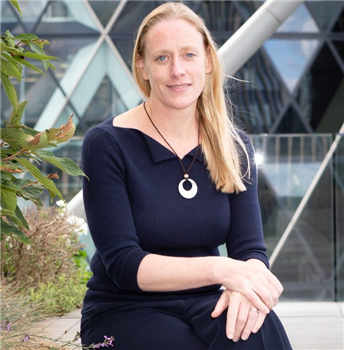
 "It’s not just about nuts and bolts, it’s about problem-solving, creative thinking, and the application of maths and these are strength and skills that women possess every bit as much as men."
Nikki Rimmington is in the midst of a successful and highly rewarding career that was founded on engineering.
Since graduating from the University of Bristol with a degree in mechanical engineering, Nikki has worked for some of the most iconic names in the car industry – Jaguar Land Rover and Aston Martin Lagonda. She is now Head of Strategy at Warwickshire-based battery cell manufacturing company Volklec.
Nikki inherited a passion for engineering and, in particular, cars from her dad and has since unfurled a fascinating and fulfilling career ranging from hands-on engineering to strategy and many points in between. That career no doubt has plenty more to give, but when the time comes for Nikki to “hand over the baton,” she would love to do so to a generation of engineers with a much bigger female presence than as at present.
“When I studied engineering at university, about ten per cent of us in the cohort were women,” she says. “Thirty years later, from talking to graduates coming through now, it’s clear that ratio hasn’t really changed. That is something I find very frustrating and feel very passionate about.”
There is, Nikki maintains, absolutely no reason why that under-representation should continue to be the case. It is a situation which historically has always been so, but we are now heading into the second quarter of the 21st century. It is time – in fact long overdue – for perceptions of the engineering sector to change.
“It really is all about perception,” Nikki says. “Even when I worked in the finance team for a car company, not directly in engineering, the CVs we received were mostly from men. When I spoke to the recruitment agencies, they said, ‘well, a car company is not of interest to girls.’ That’s rubbish.
“It’s just a question of how engineering and engineering industries are promoted. Generally, it’s with images of people in hard hats and high viz clothing standing beside big machines, but there is so much more to the sector than that. It’s amazingly cross-functional. There are so many facets to it.
“We need to promote it and talk about the exciting opportunities, the brands, the end products, the innovation. How do you get across to people what a land of opportunity it is?
“Think about working for someone like Red Bull or McLaren F1 with all their incredible facilities and incredibly bright people, in engineering but also in project management and strategy and all the other skills in so many different areas. It’s not just about nuts and bolts, it’s about problem-solving, creative thinking, and the application of maths and these are strength and skills that women possess every bit as much as men.
“We need to be persistent. I remember some years ago attending an awards ceremony where one of the automotive panellists spoke about the target of a 50/50 gender balance in recruitment candidates. He said he always pushed back when recruiters said that women were not attracted to the sector. He told them to go away and try harder and look more deeply. He was so right. Not to do so is just the path of least resistance which costs young women career opportunities and businesses some very talented people.
“Perhaps we should look at other countries like Singapore and a number of countries in Asia where a much higher proportion of women go into engineering. There they have a much higher percentage of girls studying it at school and college and that is vital because that passion does have to start at school age.”
Among the frustration for Nikki is that, in her experience, the barriers to women within engineering are all notional.
“I’ve never come across anything but courtesy and respect,” she says. “There has never been any prejudice towards me being a woman. If I have had to prove anything it was more about me being a university graduate and having to prove that I could do the job ‘hands on.’